How Parents Can Support Fall Routines with Therapy Strategies
.jpg)

As summer gives way to fall, families often find themselves adjusting to new schedules, school routines, extracurricular activities, and changing daily demands. While these transitions can be exciting, they can also feel overwhelming for children.
For many kids, especially those who thrive on predictability, changes in routine can lead to frustration, anxiety, or difficulty adjusting. The good news is that small, intentional changes can help create smoother days and more confident transitions.
At Advanced Therapy Clinic, we know that routines play an important role in helping children feel secure, successful, and ready to learn. Here are several therapy-inspired strategies parents can use to support their children throughout the fall season.
Why Routines Matter for Children
Children feel more confident when they know what to expect. Predictable routines help reduce uncertainty and provide structure throughout the day.
Strong routines can support:
- Emotional regulation
- Independence
- Communication skills
- Time management
- School readiness
- Family cooperation
When children understand what comes next, they often experience less stress and greater confidence navigating daily activities.
Create Consistent Morning Routines
Mornings can quickly become one of the most stressful parts of the day. Establishing a predictable routine can help children start the day feeling calm and prepared.
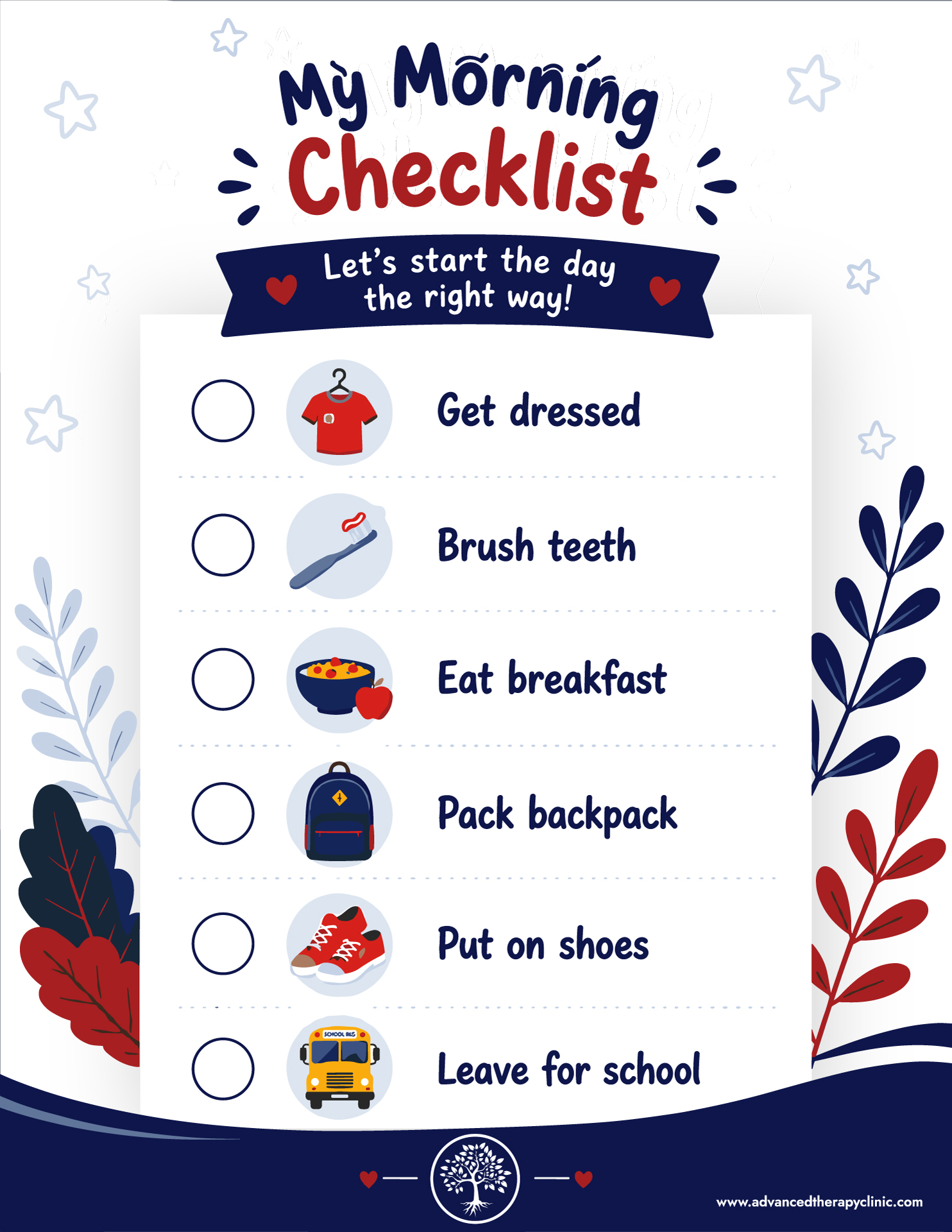
Consider creating a simple morning checklist that includes:
- Wake up
- Get dressed
- Brush teeth
- Eat breakfast
- Pack backpack
- Put on shoes
- Leave for school
Visual checklists can be especially helpful for younger children or those who benefit from additional reminders.
Over time, these routines can encourage greater independence and reduce the need for constant prompting.
Use Visual Supports Throughout the Day
Many children benefit from visual reminders that help them understand expectations and transitions.
Examples include:
- Daily calendars
- Picture schedules
- Chore charts
- Homework checklists
- Bedtime routine charts
Visual supports provide clear expectations while helping children build organizational skills and confidence.
They can also reduce power struggles by allowing the schedule to become the guide rather than the parent having to repeat instructions.
Build Healthy After-School Transitions
After a full day of learning, socializing, and following classroom expectations, children often need time to reset.
Instead of moving immediately into homework or activities, consider creating a transition routine that includes:
- A healthy snack
- Outdoor play
- Quiet time
- Reading
- Sensory-friendly activities
Giving children an opportunity to decompress can help them regulate emotions and prepare for the rest of the evening.
Support Emotional Regulation
Fall schedules often bring new challenges and expectations. It's normal for children to experience occasional frustration, anxiety, or emotional ups and downs during periods of adjustment.
Parents can help by:
- Naming emotions when they arise
- Modeling calm responses
- Practicing deep breathing together
- Creating a designated calm-down space
- Maintaining predictable routines
Teaching children that all emotions are acceptable while helping them develop healthy coping strategies can build resilience and confidence over time.
Encourage Independence Through Daily Responsibilities
Everyday routines offer valuable opportunities for children to practice independence.
Depending on your child's age and abilities, they may be able to:
- Pack their backpack
- Choose clothes for the next day
- Help prepare lunches
- Complete simple household tasks
- Follow bedtime routines independently
These responsibilities not only build practical skills but also help children develop confidence in their abilities.
Small successes often lead to greater motivation and a stronger sense of accomplishment.
Make Bedtime a Priority
As schedules become busier, sleep remains one of the most important factors supporting learning, behavior, and emotional well-being.
A consistent bedtime routine can help children wind down and prepare for restful sleep.
Helpful habits may include:
- Limiting screen time before bed
- Reading together
- Following the same bedtime sequence each night
- Creating a calm and comfortable sleep environment
Children who are well-rested are often better equipped to handle school demands, social situations, and daily challenges.
Remember That Progress Takes Time
Adjusting to new routines is a process. Some children adapt quickly, while others need additional time and support.
It's important to celebrate progress along the way.
Success may look like:
- Completing a morning routine independently
- Managing a transition with less frustration
- Following a schedule more consistently
- Communicating needs more effectively
- Taking on a new responsibility
These small victories add up and contribute to long-term growth and confidence.
Supporting Your Child Through Every Season
Fall brings new opportunities for learning, growth, and connection. By creating predictable routines, supporting emotional well-being, and encouraging independence, parents can help children navigate seasonal transitions with greater confidence.
At Advanced Therapy Clinic, we're proud to partner with families throughout Montana and Wyoming as children build the skills they need to thrive at home, at school, and in their communities. Every child develops at their own pace, and every step forward is worth celebrating.
With patience, consistency, and the right support, fall can become a season of growth, confidence, and success for the whole family.
Recent articles

Does Autism Cause Hyperactivity
Unraveling the Connections Between Autism and Hyperactivity

Sensory Overload Autism Examples
Understanding Sensory Overload in Autism: Examples and Insights

Autism and Addiction's Close Connection
Unraveling the Complex Relationship Between Autism and Substance Use Disorders

Examples of Aba Therapy for Autism
Unlocking Autism Solutions: Practical ABA Strategies Explored

The Benefits of ABA Therapy for Children with Developmental Delays
Unlocking Potential: How ABA Therapy Transforms Lives of Children with Developmental Challenges

Physical Therapy Approaches for Treating Cerebral Palsy
Innovative Strategies in Cerebral Palsy Rehabilitation

